
Can AI Characters Have Male And Female Personalities?.
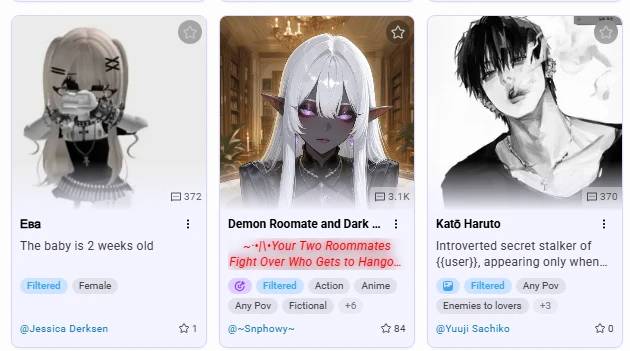
Yes, AI characters can have male and female personalities, but these personalities are created through language patterns, voice design, visual features, and behavioral settings rather than biological identity. A 2024 study with more than 1,000 users showed that people often assign gender traits to AI based on communication style, with voice and personality consistency influencing perception by over 60%. AI can simulate masculine, feminine, or neutral traits, but the character itself does not experience gender like humans do.
AI characters are increasingly designed with specific identities because users often prefer digital personalities that feel consistent and recognizable. In 2025, conversational AI platforms reached hundreds of millions of users worldwide, and many systems began offering customizable avatars, voices, and personalities. These designs allow an AI character to appear confident, gentle, humorous, professional, or emotionally supportive.
The perception of gender usually comes from several combined signals rather than one single feature. A deeper voice, shorter sentences, direct expressions, and competitive language are often associated with masculine communication styles. A softer voice, emotional vocabulary, and supportive responses are frequently linked with feminine communication styles. However, these associations are based on social patterns, not biological differences.
“AI does not become male or female. It produces communication patterns that people interpret through familiar social signals.”
Research in human-computer interaction has repeatedly shown that people naturally assign human characteristics to machines. A 2022 study involving more than 3,000 participants found that users were more likely to describe AI assistants as having personalities when the systems used consistent names, voices, and conversational behaviors.
The design process usually combines several technical components:
| Design element | How it affects personality perception |
|---|---|
| Voice | Pitch, rhythm, and emotional tone influence gender impressions |
| Language style | Word choice and sentence structure shape personality expectations |
| Avatar appearance | Facial design and clothing influence user interpretation |
| Memory function | Long-term interaction creates a stronger sense of identity |
Voice remains one of the strongest signals. Studies on voice assistants from 2019 to 2024 showed that users often identified an assistant’s gender based only on audio samples, even when they were told the voice was artificial. Higher-pitched voices were frequently rated as feminine, while lower-pitched voices were more often rated as masculine.
However, an AI personality works differently from a human personality. Human personalities develop through childhood, relationships, cultural experiences, and personal memories. AI personalities are created through training data, system instructions, and interaction patterns.
A human may become more patient after years of experience or change opinions after important life events. An AI character changes because developers update its model, adjust its settings, or modify its response patterns.
| Human personality | AI personality |
|---|---|
| Developed through personal experiences | Generated through training and programming |
| Connected with emotions and memories | Based on data patterns and system design |
| Changes through life events | Changes through software updates |
This difference does not prevent users from forming strong connections with AI characters. A 2023 research review on social chatbots found that repeated conversations increased users’ feelings of familiarity and attachment. In some studies, more than 40% of participants reported that they felt an AI companion had a recognizable personality after regular interaction.
The growth of AI companions has also created new categories of digital relationships. Some users communicate with AI characters for entertainment, storytelling, emotional conversation, or role-playing. Others explore adult-oriented conversations through services such as ai sex chat, where character design, emotional style, and conversational boundaries become important parts of the user experience.
These applications show that personality design is not limited to simple assistant functions. AI characters can be created with detailed backgrounds, preferred communication styles, hobbies, and emotional responses. A character may be written as a caring friend, a confident mentor, a fictional partner, or a humorous companion.
The challenge is deciding how much of these personalities should follow traditional gender expectations. If female AI characters are repeatedly designed as assistants or caregivers, while male AI characters are presented as leaders or experts, the technology may repeat older social patterns.
A 2024 analysis of digital assistant designs found that many commercial AI voices still relied on traditional gender associations. Female-sounding voices were often used for service-oriented roles, while male-sounding voices appeared more frequently in authority-related contexts.
Developers are increasingly exploring more flexible personality models. Instead of creating only male or female characters, some systems allow users to adjust personality traits independently.
For example:
| Personality trait | Possible expression |
|---|---|
| Confidence | Direct answers and decisive language |
| Empathy | Emotional support and understanding responses |
| Humor | Casual jokes and playful interaction |
| Curiosity | Asking questions and exploring topics |
This approach separates personality from gender. An AI character can be caring without being female, confident without being male, and logical without appearing emotionally distant.
The acceptance of flexible AI identities is also changing among users. A 2025 survey of digital technology users showed that younger users were more willing to interact with AI characters that had non-traditional identities compared with older groups. Around 55% of respondents under 30 considered AI personality customization more important than fixed gender presentation.
Another factor influencing AI personality is cultural interpretation. The same communication style may be viewed differently depending on the user’s background. A direct speaking style may appear confident in one social environment but seem aggressive in another. Because AI systems interact with global audiences, developers must consider how personality signals are interpreted across different groups.
AI characters may also become more personalized in the future. Instead of choosing between a male or female AI, users may select combinations of traits, such as a calm voice, humorous communication style, high curiosity, and supportive behavior. This could create characters that feel unique without relying on traditional categories.
The technology behind these personalities continues to improve. Large language models trained on billions of text examples can now maintain longer conversations, remember user preferences, and adjust tone based on context. In 2024, several AI companion systems reported millions of monthly conversations, showing that users increasingly value personality consistency.
Still, AI personality remains a simulation. An AI character can express affection, confidence, humor, or sensitivity, but these expressions come from learned patterns rather than personal feelings. The character does not experience identity in the human sense.
“An AI character can present a male or female personality because people recognize those patterns, but the personality exists as a designed interaction rather than a lived experience.”
Future AI characters may move beyond simple gender categories and focus more on personality diversity. Users may care less about whether an AI is male or female and more about whether the character communicates in a way that feels natural, useful, and enjoyable. The development of AI personalities will likely continue to explore how technology can create richer digital interactions while avoiding limited ideas about gender and behavior.
See your blog's Pillar Health score in 90 seconds.
Free audit. No credit card. Connects to HubSpot, Webflow, Ghost, WordPress and Notion.